
Japanese Kanji Characters
Together with the hiragana and katakana phonetic alphabets, kanji, pictographic characters originally imported from China, form the basis for written Japanese. Kanji can be exotic and beautiful when used in calligraphy or design but they are also intimidating to the student of Japanese. One of the main reasons that Japanese is considered a difficult language is its use of kanji - but what exactly makes them so difficult? Well, two things: the fact that there are different ways to pronounce the same kanji and the sheer number of individual characters.
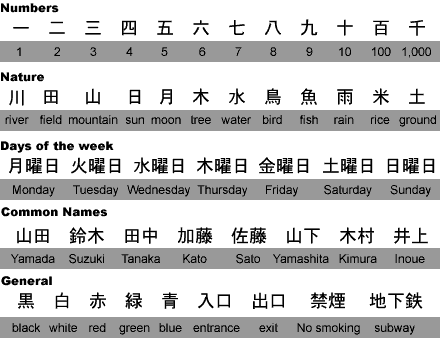
Since kanji can be used to write original Chinese words or native Japanese words, there are two types of pronunciation used. The former is called on yomi (on readings) and the latter kun yomi (kun readings). Some kanji can have dozens of different readings but most have two or three. As for the number of characters - a comprehensive set of dictionaries can have up to 50,000 kanji listed but only a fraction are actually used today. In 1981, the government created the joyo kanji, a list of 1,945 kanji for general use. That's a lot to learn - and necessary if you want to attend a Japanese university - but not impossible. Plus, the number of kanji you need to recognize to get by in daily life in Japan is far fewer and there's little need to actually write them. There are many good books on the subject but below is a small sample of the most commonly seen kanji.
Related content:
Advertise
